Sassuolo Is an Export Operating System, Not Just a Tile Address
International buyers often view Sassuolo merely as a geographic origin for finished tiles. The district is organized around more than tile production. It functions as an export operating system. Its true capacity stems from the dense concentration of production, machinery, chemistry, testing, logistics, and commercial mediation surrounding ceramic manufacturing.
The district operates as a practical export infrastructure for international buyers, Modena companies, trade associations, researchers, and economic development stakeholders — regional supply-chain records confirm as much. Treating Sassuolo as only a finished-tile cluster misses the machinery, mold, kiln, testing, frit, color, agency, and installation-system layers that make exports repeatable.
Key Takeaway: This analysis maps the specific industrial roles and technologies present in the district data. It does not rank companies by turnover, production capacity, or export market share.
The Production Core: Porcelain Stoneware, White Body, and Design Brands
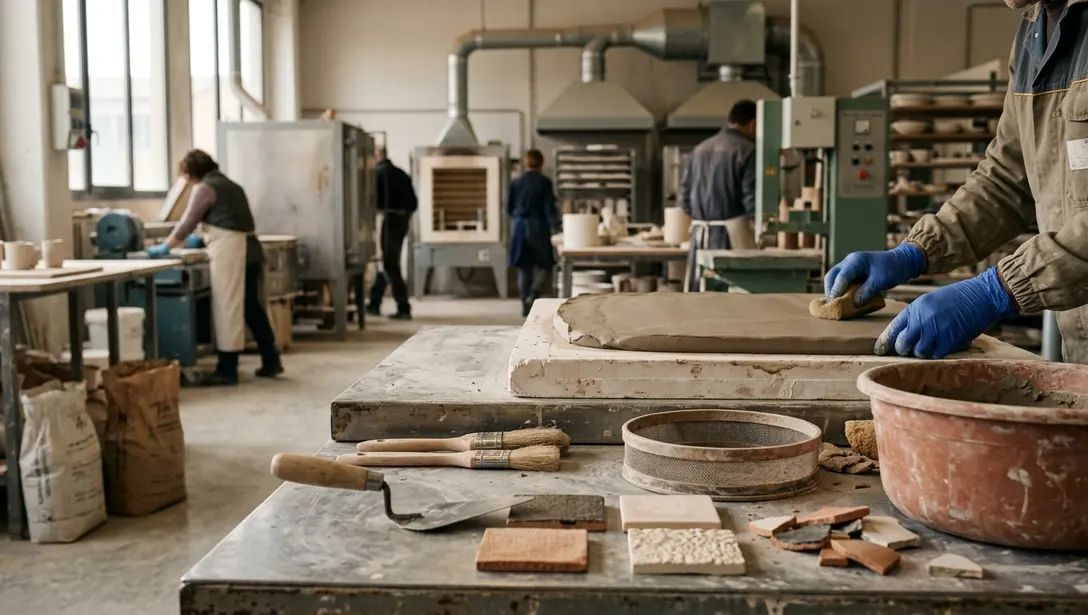
Porcelain stoneware anchors the industrial output of the region. This encompasses technical gres porcellanato and glazed porcelain applications rather than a single homogeneous product. Material and product logic dictate the structure of the district's core manufacturing base.
COEM S.p.A. and Ceramica Fioranese illustrate how parent companies and secondary brands deploy specific technologies. Their operations cover Smaltoporcellana, extra-thick glazes, single pressing, and white-body double-firing. Similarly, SICHENIA Gruppo Ceramiche S.p.A., founded in 1973 with its headquarters and primary plant in Sassuolo, anchors its offering through distinct product lines. These include CUORE DI PIETRA, Antiqua, Pavé di Sichenia, and Pavé Melange.
Decorative export niches expand the offering further. Manufacturers supply third and fourth firing applications, listelli, tozzetto pieces, cotto references, and tumbled marble effects. A buyer sourcing decorative small formats requires entirely different district contacts than a buyer checking porcelain body stains or kiln technology.
Warning: While founding dates and catalogued product lines demonstrate continuity and specialization, they should not be treated as proof of current output capacity or delivery availability.
Why Machinery and Testing Make the District Exportable
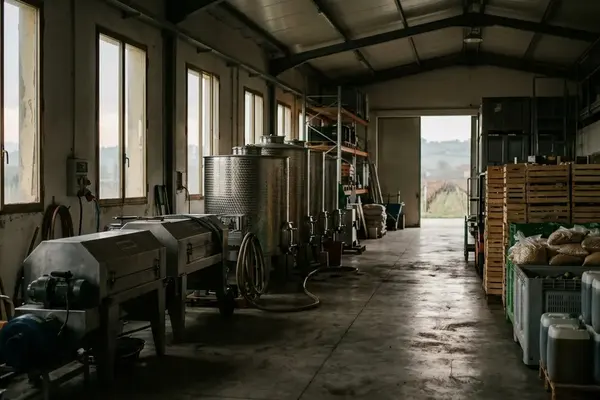
Facilities across Sassuolo and neighboring Fiorano Modenese (MO) demonstrate that exportability requires rigorous process control. Powders must be prepared consistently, presses need reliable mold geometry, kilns must hold precise conditions, and laboratories must verify the final output.
LB Officine Meccaniche S.p.A. handles the critical early stages of production. The company manages dry grinding, granulation, premixed powders, and atomized body preparation for ceramic and construction products. Further down the line, Italforni S.r.l., established in 1977 by engineer Leone Padoa, supplies the thermal infrastructure. Their equipment includes roller kilns, tunnel kilns, shuttle kilns, sliding batts, industrial dryers, and double-channel roller kilns.
Precision Tooling and Laboratory Verification
Forming the tile requires exact geometry. A regional mold and pressing-equipment specialist founded in 1980, which obtained ISO 9001 certification in 1997, provides the necessary tooling. Their output includes isostatic plugs, structured plugs, soft transfer molds, and magnetic punch attachment systems.
Laboratory verification ensures the final product meets international standards. Testing equipment sourced from the district includes abrasimeters, muffle furnaces, and infrared moisture analyzers. Distribution links for these testing instruments are documented in markets as distant as South Korea and Germany.
Raw Materials and Ceramic Chemistry Behind Reliable Supply
Export reliability depends heavily on repeatable body and glaze chemistry. The sourcing logic starts with frits and enamels before moving to body stains and rare earths. Fritta Italia S.R.L., founded in 1973, supplies the frits and enamels required for single-firing and double-firing ceramic production.
Color consistency is equally critical. INCO Industria Colori SpA, founded in 1987 and relocated to Montebonello in 1998, provides ceramic colors, body stains for gres porcellanato, and third-firing decoration materials.
Raw-material agency records track a clear expansion in chemical sourcing. One agency expanded from alumina work in 1993 to corundum, kaolin, and rare earths by 1996. The chemistry layer also integrates zirconium silicate, third-fire materials, and Seger cones, supporting the district's technical consistency without claiming present shipment volumes.
Commercial Gateways: Exporters, Agents, Profiles, and Installation Systems
Much like the textile networks of Carpi (MO), commercial access operates as a distinct layer from manufacturing — a structural separation that allows specialized mediation. Export agencies, represented manufacturers, cut-to-size material consultants, and installation-system suppliers bridge the gap between production capability and international buyer access.
- Export Mediation: ASSOCIEXPORT S.R.L., founded in 1963, maintains more than 35 years of export activity in building materials, acting as a mediator rather than a direct manufacturer.
- Brand Representation: BATIK IMPORT-EXPORT S.R.L., founded in Sassuolo in 1999, represents producers such as Ceramica Sant’Agostino and Ceramica Serenissima.
- Custom Materials: An exporting and consulting firm founded in 1982 specializes in cut-to-size materials like travertine, limestone, and agglomerates.
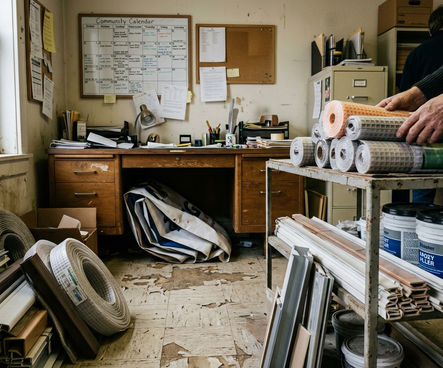
The system extends directly into installation components. Suppliers provide cement adhesives, epoxy fillers, edge profiles, uncoupling membranes, waterproofing membranes, stair-nosing profiles, low-thickness heated screed systems, and balcony or terrace assemblies. Exhibition support activities reinforce this commercial gateway through metal display furniture, prototyping, exhibition stands, and participation support for major ceramic and building-material trade fairs.
How to Read Sassuolo Before Entering the Market
Using historic company data as a proxy for present production capacity can mislead procurement teams. You must verify current certifications, available product families, export territories, represented brands, technical sheets, safety documentation, and installation manuals.
Pro Tip: Separate your procurement inquiry into distinct categories: tile product, production technology, raw material or chemistry, laboratory verification, installation system, and commercial representation.
Build a short supplier map by category before contacting companies, so the first conversation is about the right layer of the Sassuolo ceramic system.