In this Article
- A Buyer’s Morning in Modena
- Read Modena as a Capability System, Not a Product List
- Case Lens: Il Bulino and the Export of Cultural Precision
- Case Lens: Gualdi Cucine and Service-Led Manufacturing
- How to Match Global Demand with Modena Strengths
- Avoid Three Common Errors When Reading Local Export Potential
- Build the Next Export Match
A Buyer’s Morning in Modena
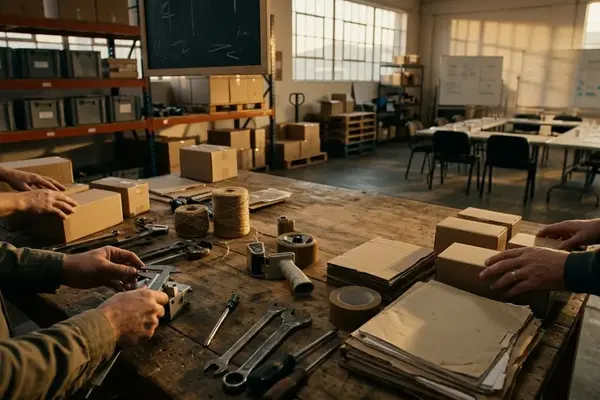
The meeting table is not large, but it carries two worlds.
On one side sits a manuscript facsimile proof: paper, colour, binding, and the quiet pressure of cultural accuracy. On the other side sits a kitchen cabinet sample: surface finish, hinge movement, edge detail, and the practical question of whether the same quality can arrive on site, on time, in another country.
This is how I prefer to read the Modena export economy. Not as a neat product list. Not as one sector with one story. Modena works through local capabilities that need translation into buyer-relevant value.
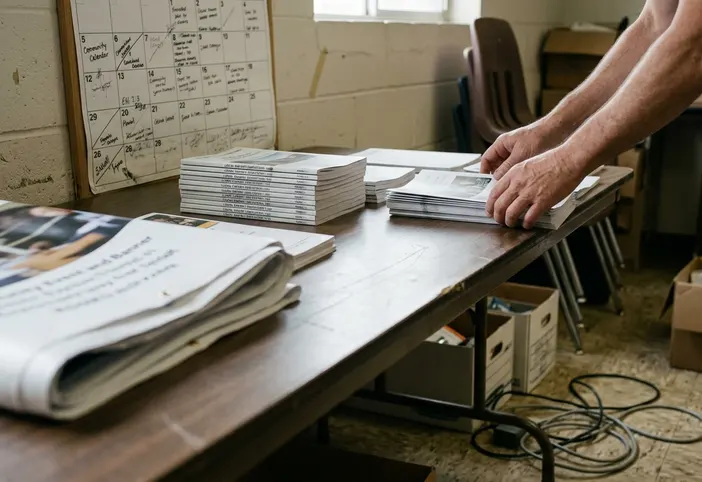
An international buyer may come from institutional procurement, specialty retail, contract interiors, cultural collection management, or supply-chain evaluation. Each arrives with a different problem. The facsimile buyer asks about authenticity and editorial credibility. The kitchen buyer asks about measurement, sequencing, installation readiness, and partner reliability.
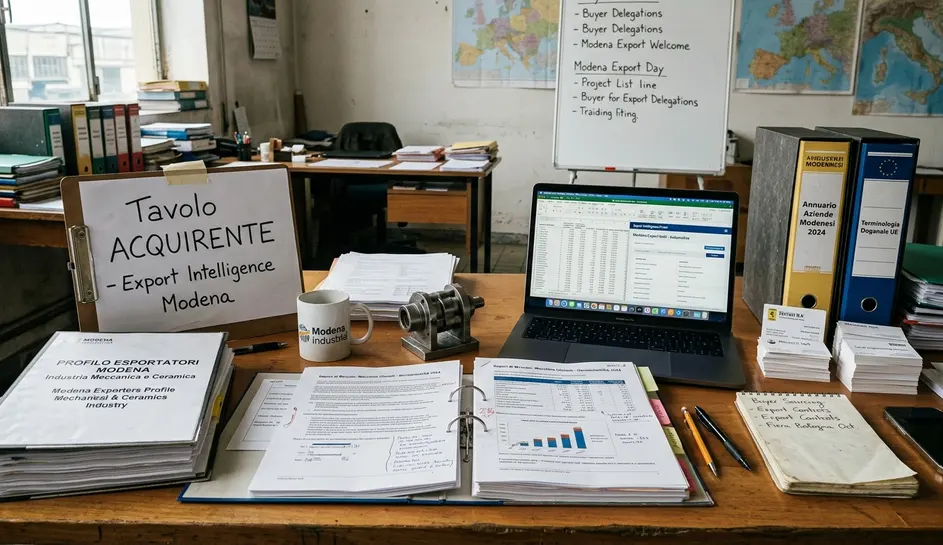
So the useful question is not simply, “What does Modena sell?” The better question is: which local capability answers this specific demand?
Here, I will stay close to named company facts and practical evaluation steps. The two cases are illustrative, not a statistical profile of the whole Modena economy. That distinction matters because unsupported macro claims can make a district sound clearer than it is.
Read Modena as a Capability System, Not a Product List
Export demand usually starts with a buyer problem. I write that sentence often in my field notes because it prevents a common mistake: beginning with what a supplier wants to sell rather than what the buyer must solve.
Start with the buyer problem
In Modena, the problem may be authenticity, manufacturing reliability, customisation, delivery certainty, institutional fit, or after-sales coordination. A cultural institution may need provenance language and edition details. A contract-interiors buyer may need finish samples, site measurements, and repeatable delivery.
A buyer visiting Fiorano Modenese (MO) may carry one checklist; a buyer meeting a supplier connected to Carpi (MO) may carry another. The local reputation helps open the conversation, but it does not complete the evaluation.
Then map the capability
I use six capability categories before I compare companies:
- Craft knowledge: what specialised know-how sits behind the product?
- Design culture: how does the company translate taste, function, or heritage into a buyer-facing offer?
- Production capacity: what can the company deliver repeatedly without losing control?
- Documentation: what can it show through catalogues, technical sheets, edition notes, compliance records, or quality documents such as ISO 9001 or ISO 9002 where relevant?
- Service model: does the supplier sell an object, a coordinated project, or a production relationship?
- International communication: can the team explain scope, limits, lead time, and responsibilities across languages and procurement cultures?
Buyer note: A district becomes legible to global buyers when its capabilities are described in the buyer’s terms, not only in local product language.
Use four diagnostic questions
Before I draw conclusions, I ask four plain questions. What can the company prove? What can it adapt? What can it deliver repeatedly? Where are its limits?
Those questions sound simple. They are not soft. They force the discussion away from reputation and toward evidence.
Case Lens: Il Bulino and the Export of Cultural Precision
IL BULINO EDIZIONI D'ARTE SRL is described in the provided company facts as an art and history book publisher founded in Modena in the early 1980s. I read this case through cultural precision: the buyer is not only purchasing printed pages, but confidence in reproduction, context, and editorial care.
What the buyer is really buying
A facsimile is a high-fidelity reproduction of an original manuscript or historical object. An illuminated manuscript is a medieval text decorated by hand with initials, borders, miniatures, or precious-colour ornamentation.
Those definitions matter for international buyers. If a museum shop, university library, collector, or cultural institution cannot explain what makes the object credible, the export value weakens. Precision becomes part of the product.
Il Bulino’s product-line evidence points in that direction. Il Giardino delle Esperidi is identified as an illustrated book series. Ars illuminandi is identified as a facsimile manuscript series. The export logic follows: cultural value travels best when the buyer receives enough language, edition detail, and material description to justify the purchase internally.
Evidence before enthusiasm
Here is the practical test I would use with a cultural-publishing buyer. Ask for catalogue notes first. Then edition details. Then material descriptions. Then institutional references if available.
The order is deliberate. A beautiful object may open the door, but procurement needs words it can reuse: in acquisition files, retail descriptions, exhibition notes, or donor-facing material.
Practical check: For cultural exports, ask the supplier to explain the object as if speaking to a curator, a buyer, and a finance officer in the same room.
Case Lens: Gualdi Cucine and Service-Led Manufacturing
GUALDI CUCINE DI GUALDI ALESSIO is described in the provided facts as a kitchen manufacturer founded in 1954. Gualdi Alessio is identified in those facts as founder and owner.
This case begins from a different buyer condition. A kitchen is physical, but the export value often sits in coordination. A cabinet sample on the table is only the first proof point.
From object to project
A contract-interiors buyer wants to know whether the supplier can manage measurement coordination, delivery sequencing, installation readiness, finish options, and partner reliability. A distributor asks similar questions, but with different pressure: repeatability, margins, after-sales clarity, and customer support.
The phrase llave en mano should be read as a turnkey delivery service. The buyer receives a coordinated solution rather than isolated components. In export terms, that changes the commercial promise. The supplier is not merely sending goods; it is helping the buyer reduce project friction.
Producción en serie refers to mass production for third parties. That matters for contractors, distributors, private-label buyers, and supply-chain customers who care less about a single branded kitchen and more about repeatable production under agreed specifications.
What to confirm before procurement
I would not evaluate this kind of supplier by catalogue appeal alone. I would ask for technical sheets, finish samples, delivery scope, and a project workflow. Then I would test the handoff points: who measures, who approves drawings, who sequences delivery, who handles installation readiness, and who responds after delivery.
One catch: the depth of after-sales coverage, territory availability, and acceptable project scale should be confirmed directly before procurement.
Buyer note: In kitchen exports, the service model can be as important as the cabinet door.
How to Match Global Demand with Modena Strengths
When I help a buyer or institution structure an export conversation, I use a sequence. It is basic on purpose. A clean sequence prevents vague enthusiasm from becoming a weak supplier brief.
Step 1: Define the demand signal precisely
Name the buyer situation before naming the supplier. Is the demand for cultural collections, contract interiors, specialty retail, institutional procurement, or third-party production?
One example: if the target is a university library acquisition, the demand signal is not “Italian books.” It is cultural credibility, edition clarity, acquisition language, and long-term relevance to a collection.
Step 2: Translate demand into capability requirements
Now convert the signal into requirements. The list may include documentation, minimum order logic, customisation, compliance, installation, lead time, language support, and proof of prior work.
This is where local bodies and trade associations can help international stakeholders. Their role is not to replace supplier due diligence. It is to translate district strengths into buyer pathways that outsiders can understand.
Step 3: Build the right evidence pack
For cultural publishing, the pack may include catalogue notes, edition details, material descriptions, and institutional references. For kitchens, it may include technical sheets, finish samples, delivery scope, and project workflow.
The evidence should match the buyer’s internal approval process. A retail buyer, a curator, and a contractor do not defend purchases with the same documents.
Step 4: Choose the buying model
Decide whether the relationship concerns a finished branded product, a turnkey service, or production for a third party. This step often clarifies the whole conversation.
A finished product needs brand, catalogue, pricing, and distribution clarity. A turnkey service needs responsibility mapping. Third-party production needs specification control, repeatability, and confidentiality discipline.
Practical check: Send the same structured brief to each shortlisted organisation. Comparable answers are easier to evaluate than polished but uneven presentations.
Avoid Three Common Errors When Reading Local Export Potential
Local export potential is easy to overread. I have seen buyers move too quickly because a place name sounded strong enough. That is the one failure pattern worth naming clearly here.
Error 1: Treating reputation as supplier evidence
A buyer treats Modena’s general reputation as enough evidence, then discovers too late that the supplier cannot provide the documentation, delivery scope, or service coordination required by the buyer’s market. The lesson is direct: reputation can justify a first meeting, but not a purchase order.
Warning: Check product, service, documentation, and delivery evidence before treating local reputation as supplier fit.
Error 2: Comparing unlike companies by size alone
A niche cultural publisher and a kitchen manufacturer may both export value, but through different buyer relationships. One may export editorial credibility. The other may export coordinated manufacturing capacity.
Size can matter for delivery, but it does not explain the value proposition by itself. Compare the company against the buyer problem first.
Error 3: Using unsupported market-growth claims
Macro context has its place. It helps institutions understand trade flows and gives companies a broader frame. But vague growth claims do not help a buyer decide whether a supplier can meet documentation, service, or delivery requirements.
When macro context is needed, use official trade data and named institutional sources. For European goods-trade definitions and classifications, the Eurostat international trade in goods methodology is a practical starting point.
Build the Next Export Match
Return to the Modena meeting table. The manuscript facsimile proof and the kitchen cabinet sample still sit side by side, but the buyer’s question has changed.
It is no longer, “What does Modena sell?” It is, “Which Modena capability fits this demand?”
That shift is small, and it is powerful. Local districts become globally legible when evidence, service model, and buyer use case are placed side by side. A facsimile series needs cultural and editorial proof. A kitchen project needs coordinated manufacturing and service clarity. Both can carry export value, but they ask the buyer to read value in different ways.
One-Page Buyer Brief Before Contacting a Modena Supplier or Institution
- Define the use case: collection, retail, contract interior, institutional procurement, or third-party production.
- Name the target market and buyer channel.
- State quantity, edition interest, project scope, or production need.
- List required documents, such as catalogue notes, technical sheets, compliance records, finish samples, or edition details.
- Clarify delivery expectations, installation responsibilities, language needs, and after-sales questions.
Create a two-column demand-to-capability map for one target market, then shortlist three Modena companies or support organisations and send each one the same structured buyer brief.