How Mirandola Turned Clinical Problems into an Export District
In the 1960s, the area around Mirandola faced a distinct clinical need: translating emerging hospital requirements into manufacturable, exportable biomedical products. The district's early association with artificial kidney production set a precedent for the region. Instead of pursuing broad consumer-scale manufacturing, local engineers and clinicians built a response rooted in extreme technical specialization. The measured impact of this shift is visible today in how international buyers interact with the cluster.
International buyers frequently recognize the Modena biomedical and pharmaceutical district by name, yet the actual sourcing value lies deeper. Success requires understanding exactly which companies produce regulated active pharmaceutical ingredients (APIs), sterile devices, processing machinery, dental equipment, or adjacent healthcare products.
Challenge: Exporting Products Where Trust Is Part of the Product
Field procurement directors frequently note that sourcing biomedical and pharmaceutical exports differs fundamentally from buying ordinary industrial goods. The systemic challenge centers on buyer risk. International sourcing decisions rely on evaluating technical fit, regulatory history, quality systems, clinical use cases, materials, and continuity of supply.
Opocrin S.p.A., founded in 1964 in Corlo di Formigine, illustrates this complexity. The company focuses on active pharmaceutical ingredients, including heparin, low molecular weight heparin, catalase, surfactant, dermatan sulfate, and OP2000. The export challenge for such APIs is severe—procurement records from the district indicate as much. A buyer is not merely sourcing a molecule; they are assessing therapeutic relevance, manufacturing reliability, and strict documentation expectations. The pathway forward demands that suppliers treat trust and traceability as core components of the physical product.
Solution: Specialize Narrowly, Document Carefully, Export Technically
Before establishing a global footprint, district firms often operated as regional suppliers. During their engagement with international markets, they realized that competing as generic suppliers was unsustainable. The outcome was a pivot toward demanding subcategories. Firms built export positions by focusing narrowly and documenting carefully.
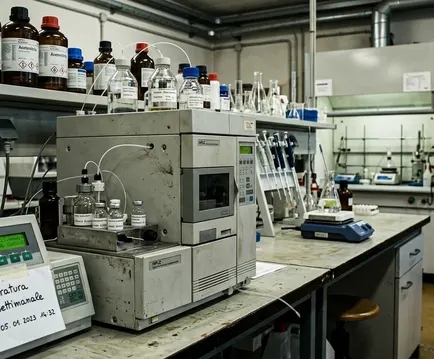
Opocrin demonstrates this through specific use cases. The firm positions heparin as an anticoagulant and antithrombotic. Low molecular weight heparin is described as associated with reduced side effects. Catalase targets wound, burn, and ulcer healing. Surfactant addresses premature infants suffering from Respiratory Distress Syndrome, while OP2000 links to pre-infarction angina and inflammatory bowel disease.
Medical device manufacturers followed a similar trajectory. Lucomed / Elcam Medical Italy Spa focused on post-operative drainage. Following its 1993 founding and production authorization, the company achieved ISO 9002 and CE certification in 1995 through TUV Product Service GmbH. This technical export model mirrors the deep supply chain integration observed in other regional hubs, such as the ceramics cluster in Fiorano Modenese (MO) or the textile networks of Carpi (MO), but applied to highly regulated clinical settings.
The Wider Export System: Cosmetics, Dental Equipment, Packaging, and Pharmacy Expertise
The Modena export ecosystem extends beyond core biomedical devices into adjacent health, beauty, dental, and packaging capabilities. Scaglietti S.r.l., founded in 2000 by Simone and Matteo Scaglietti, carries a family reference to Sergio Scaglietti, the renowned Modena coachbuilder. The company record emphasizes phytocosmetics and essential oils used as bases for perfume components without chemical additives.
Similarly, Lacote S.r.l., founded in 1986, produces natural cosmetics. Its portfolio includes the GUAM seaweed mud line, glycolic acid in Glico lifting products, and alfa-SPD in solar protection products. MB Divisione Cosmetica S.p.A. supports this sector with over 30 years of operations. Dental and pharmacy expertise further round out the district, with Eurodental dating to 1973 and Farmacia Grandemilia operating since 1967.
Buyer note: The district's strength lies in its adjacent niches. Buyers can source phytocosmetics, dental units, and pharmaceutical packaging machinery within the same geographic footprint.
Results: What International Buyers Can Actually Use
Historical company records translate directly into buyer utility. Opocrin dates to 1964. Lucomed / Elcam Medical Italy Spa records its founding in 1993, securing ISO 9002 and CE certification by 1995. Lacote dates to 1986, Eurodental to 1973, and Farmacia Grandemilia to 1967.
These timelines allow international buyers to segment Modena suppliers by regulated pharmaceutical ingredients, medical devices, process engineering, packaging machinery, cosmetics, and dental equipment. The export-intelligence value of the district approach is substantial. It enables procurement teams to identify technical families rather than just individual company names, streamlining the initial phases of international sourcing.
Limits and Due Diligence: Where the District Label Is Not Enough
A district reputation does not replace supplier-level verification. This is especially true in pharmaceuticals, medical devices, and clinical-use categories. A buyer who treats the Mirandola district label as equivalent to current CE, MDR, API, or product-registration readiness may shortlist the wrong supplier.
Thorough buyer checks must include verifying the current legal entity, active certifications, product registration status in the target country, and the specific manufacturing site. Procurement teams must also review quality documentation, material specifications, sterilization or clean-room claims, and export-market experience. While historical longevity in the Modena cluster strongly correlates with manufacturing maturity, company histories serve only as screening evidence and do not guarantee current regulatory conformity for new market entries.
Older standards cited in company histories require careful interpretation. References to the Medical Devices Directive 93/42/EEC or EN ISO 9002 should be read historically. While modern facilities operate under ISO 9001 or ISO 13485, older certificates help reconstruct credibility at a specific point in time but must be checked against current applicable requirements. Cosmetics and aesthetic products demand a different review path, focusing on ingredients, claims, labeling, distributor agreements, and market-specific compliance rather than the API or sterile-device due-diligence process.
Warning: The same Modena sourcing search can lead to very different due-diligence paths. An anticoagulant API, a sterile drainage device, an ALU-ALU packaging machine, a dental unit, and a natural cosmetic line do not carry the same documentation burden.
Strategic Recommendation: Use Modena as a Sourcing Map, Not a Single Sector
The challenge of exporting trust-heavy products forced Modena's manufacturers into a strict solution: technical specialization supported by rigorous documentation. The result is a sourcing district that helps buyers navigate high-specificity suppliers—a critical advantage in regulated markets.
Modena should not be reduced to a single biomedical category. Its export relevance spans APIs, hemodialysis, cardiac surgery devices, sterile plastics, medical-device engineering, packaging machinery, dental systems, natural cosmetics, and pharmacy-linked expertise.
Procurement note: Define the product category before outreach: API, sterile device, machinery, dental equipment, cosmetics, or pharmacy-linked product. State the target regulatory market and whether the supplier must support registration, importer files, or declarations.
Start from the exact documentation need, then shortlist firms by technical fit. Treat the district as a detailed topographical map of capabilities, and execute your procurement strategy by targeting the specific technical families that align with your regulatory requirements.