The Commercial Stakes of the Great Britain Border
An incomplete declaration, ambiguous delivery term, or unassigned import responsibility delays machinery, increases landed costs, and weakens a UK buyer relationship. Since 1 January 2021, movements from Italy to Great Britain demand strict export and import formalities. One unnamed mid-sized Modena engineering firm adapted by treating the UK order strictly as a linked export-and-import transaction. Before sales issued a quotation, staff identified who would import the machine into Great Britain, who would instruct the customs representative, and which party would absorb transport, clearance, duty, and import VAT. That decision moved customs compliance to the very beginning of the commercial dialogue.
The minimum commercial handoff identifies the exporter, importer, customs representative, Incoterm, named place, commodity code, origin, customs value, currency, and transport route before collection. This workflow addresses shipments from Italy to England, Scotland, and Wales; movements involving Northern Ireland require a separate assessment because its goods arrangements differ. Establishing these parameters early prevents shipments from stalling at the border while carriers wait for missing importer details or disputed duty payments.
Rebuilding the Customs Workflow for UK-Bound Equipment
The firm rebuilt the order sequence around decisions that customs data depends on. Technical staff first described and classified the machine or component, then checked origin against the applicable rule and available supplier or production records. Assembly or dispatch in Modena does not automatically establish EU preferential origin. The product-specific origin rule and supporting production or supplier records must support any preference claim under the EU-UK arrangements.
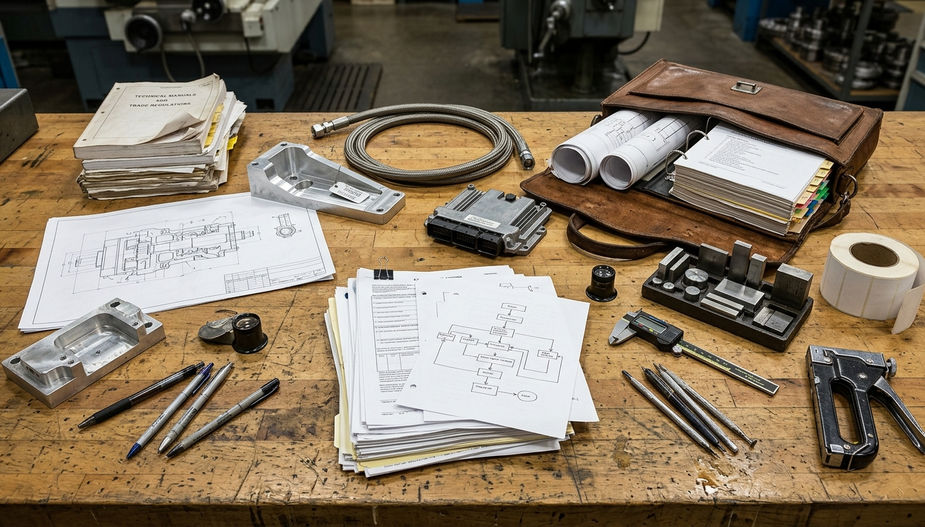
Sales and logistics confirmed the UK importer, selected the Incoterm and precise named place, and translated those decisions into the quotation. Finance then verified the invoice value and currency. The quotation, commercial invoice, packing list, and broker instructions must agree on commodity code, plain-language goods description, customs value, currency, gross weight, net weight, country of origin, delivery term, and named place. Discrepancies across these documents routinely trigger customs holds and clearance delays.
Operational checks rely on the official guidance for importing goods from the EU into Great Britain, alongside the GOV.UK Trade Tariff and applicable origin guidance for the planned shipment date. An Italian exporter generally uses its EU EORI for the export side, while a UK importer generally needs the appropriate GB EORI to clear the goods locally.
Structuring Transparent Quotations for Border Costs
Pricing requires separating the machine's commercial value from the costs generated by the chosen delivery structure. Sales first chose the handover point and assigned transport and import responsibilities, subsequently requesting freight and customs-representation estimates to build a transparent delivered price. A transparent quotation shows separate lines for equipment or components, freight, insurance, export or import customs-representation charges, possible duty, and import VAT. Storage, inspection, demurrage, or redelivery appear as exceptional charges.
Strategic Delivery Allocation for Fiorano Modenese (MO) Exporters Under FCA, the Modena seller delivers at the specified handover point, leaving the buyer to arrange main transport and import. Under DAP, the seller manages transport to the named destination while the buyer normally handles import clearance and import charges. DDP creates greater obligations for the seller and should never be offered casually without checking UK registration, customs, VAT, and importer-of-record implications.
Delivery wording states a precise place and edition, such as 'DAP buyer's Birmingham premises, Incoterms 2020.' The Great Britain boundary in a Modena machinery quotation requires this precision; Incoterms 2020 allocates delivery tasks, but it does not by itself prove preferential origin, create a GB EORI, or settle import VAT treatment. The quotation carries a fixed expiry date, such as 15 calendar days after issue where freight or currency inputs may change, and identifies customs-related charges that are excluded or adjustable.
Establishing a Pre-Dispatch Control Gate in Modena
The case was converted into a release gate owned across departments. Sales confirmed the buyer's legal identity, importer assignment, delivery term, and named place. Technical staff approved the product description and classification inputs. Finance checked invoice value, currency, and tax treatment. Logistics reconciled the final documents with the carrier or representative. The single order file contains the accepted quotation, classification rationale, origin evidence, commercial invoice, packing list, transport record, export declaration, customs correspondence, and delivery confirmation.
A practical internal deadline completes the document reconciliation by the end of the business day before scheduled collection, leaving discrepancies to be corrected before the vehicle reaches the Modena loading point. The release record names the responsible sales, technical, finance, and logistics reviewers. Goods do not leave the Modena facility until the importer, customs representative, document set, and delivery responsibilities are confirmed.
Executing a DAP Spare-Parts Shipment to Birmingham
The hypothetical begins when the Modena seller receives an order for identified replacement components destined for Birmingham. The Modena-to-Birmingham handoff breakdown requires Italian export identity, GB importer assignment, component-level origin proof, named-place DAP pricing, and pre-collection document reconciliation. The sequence contains seven control stages.
- Receive and identify the order: The Modena seller confirms the destination is Birmingham, Great Britain, and identifies the specific replacement components requested.
- Agree DAP and the named destination: Seller and buyer record DAP at the buyer's full Birmingham premises under Incoterms 2020. Under the stated DAP structure, the Modena seller manages carriage to the named destination.
- Collect importer and representative details: The buyer supplies its legal name, delivery address, GB EORI, and customs-representative contact. The buyer accepts responsibility for UK import clearance, applicable duty, and import VAT.
- Validate classification and origin: Technical staff confirm the commodity code for the spare parts and verify origin against supplier records to support any preference claim.
- Align quotation and invoice data: Finance ensures the commercial invoice matches the agreed DAP pricing structure, separating the component value from the freight costs to Birmingham.
- Complete pre-collection document review: Logistics checks the commercial invoice, packing list, and broker instructions against the carrier's requirements by the close of business prior to dispatch.
- Archive export and delivery evidence: The single order file is updated with the transport record, export declaration, and final delivery confirmation once the goods reach the Birmingham premises.