The Moment Before the First Foreign Order
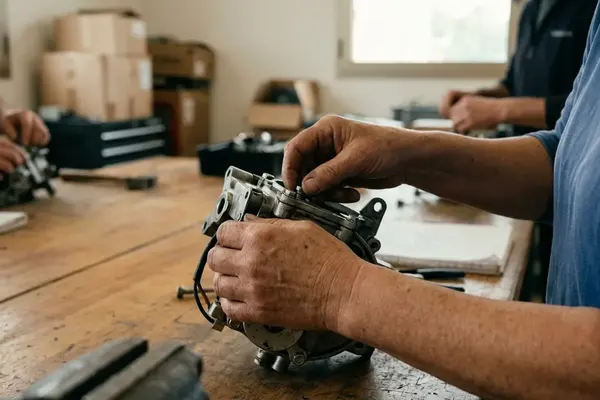
I watch this scene unfold regularly: a Modena SME manager walks into a training room at the Camera di Commercio Modena. They carry product sheets, compliance files, and a daunting list of questions from a potential foreign buyer. The tension in the room is palpable. A company might manufacture an exceptional product, but export readiness hinges on documentation, role clarity, sampling procedures, and disciplined follow-up.
We frame export training as preparation for decisions under pressure, not as classroom theory. PROMEC operates as a local course organizer and service provider in this context, facilitating the space where this preparation happens rather than acting as a rubber stamp for export success.
What Export Training Must Actually Solve
Effective SME export training connects four distinct workstreams: market understanding, regulatory readiness, internal organization, and buyer-facing communication. Generic export enthusiasm fails when confronted with concrete capabilities—companies must prepare documentation, manage strict deadlines, assign ownership, and recognize exactly when specialist advice is required.
Training does not magically transform an SME into an instant international operator. Instead, it reduces avoidable confusion before the critical operational trigger points hit: the first enquiry, quotation, shipment, audit, or compliance request.
Operational point: Export training is valuable when it changes company routines, not only when it transfers information.
Compliance Literacy: From Testing Standards to Buyer Confidence
International buyers rarely ask for reassurance; they ask for evidence. Technical compliance dictates international credibility. We see this acutely in testing and environmental training, where moving from standard awareness to operational control is non-negotiable. These specific environmental standards and sampling methods are central for firms dealing with testing, water, waste, sludge, or regulated industrial processes, but they may be peripheral for an SME exporting non-regulated consumer goods.
For relevant firms, UNI CEI EN ISO/IEC 17025:2005 serves as the baseline testing management standard for competence and process control. However, attending a course is not the same as achieving accreditation. Furthermore, D.Lgs. 152/2006, the Italian environmental framework decree, shapes the documentation and operational obligations required to prove compliance.
Specific protocols like ISO 5667-10, ISO 5667-11, and ISO 5667-14 govern water sampling and quality assurance. Meanwhile, UNI 10802:2004 dictates the manual sampling of liquid and granular waste, and Quartatura remains the standard IRSA-CNR sampling method for sludge. A company has a strong product but loses credibility instantly when it cannot provide these sampling records or compliance explanations.
Training Logistics Are Part of the Export Method
Course administration teaches the exact discipline required in export operations. The behaviors required to enter a course properly mirror the rigor needed to execute an international shipment. Consider the administrative baseline: a 7-day pre-registration deadline and a 6-day course confirmation notification. These are practical rehearsals for how SMEs must manage external buyer deadlines.
PROMEC acts as the course organizer and fiscal entity, with payments routed through Banca Popolare Società Cooperativa. Managing these logistical steps without error is the first test of export readiness.
Practical step: Assign one internal owner for training follow-up, document collection, and deadline monitoring to ensure administrative discipline translates into operational habit.
People Readiness: Selection, Temporary Management, and Role Clarity
Export readiness is fundamentally a staffing problem. SMEs need personnel capable of managing languages, documents, buyer expectations, compliance tasks, and cross-functional coordination. The first step is mapping the missing roles: export coordinator, compliance contact, digital marketing owner, finance/payment contact, and external advisor liaison.
To bridge these gaps, firms often turn to specialized recruitment. CESPIM S.A.S. focuses on qualified personnel selection, led by founder and lead doctor Osvaldo Gorini. The organization's roots provide context for its HR sector expertise: the original Centro Europeo para la Empresa network was founded in 1977, and accreditation under D.L. n. 469 occurred in 1997. When full-time hires are premature, the Rent a Manager model offers a flexible contractual approach for temporary executive capability, allowing SMEs to scale their expertise alongside their export volume.
Digital Market Entry: SEO, Social Tools, and the Buyer’s Search Path
Foreign buyers often investigate suppliers long before making direct contact. We build digital market entry strategies backward from the buyer's search path. SMEs require discoverable, credible, and consistent information. A digital workshop can improve discoverability and message consistency, but it does not solve missing delivery procedures or technical documentation gaps.
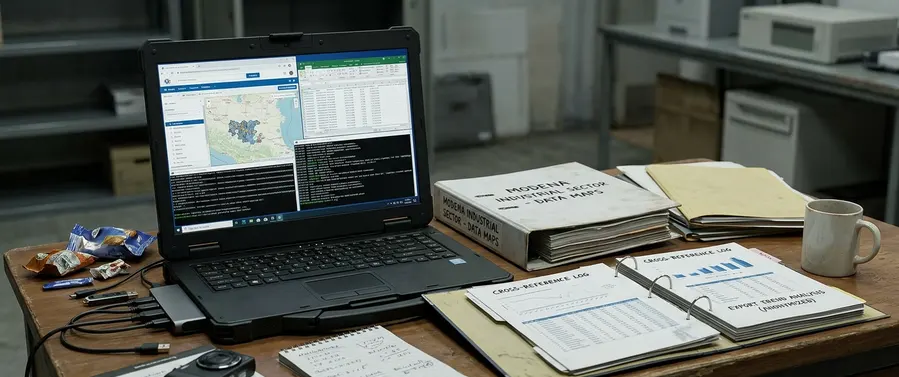
Visibility requires targeted SEO focus areas: multilingual search intent, precise product terminology, and technical pages that directly answer buyer questions. For channel discipline, tools like Hootsuite support scheduling, though they are never a substitute for a core strategy. The Blendtec business case remains a benchmark here, demonstrating how product demonstration and memorability drive distribution interaction. In the PROMEC digital training context, Marketing Informatico serves as a partner agency, with instructor and administrator Massimo Tegon guiding the practical application of these digital tools.
How to Build a 90-Day Export Training Plan
Converting training into implementation requires a strict sequence. The total planning horizon is 90 days.
Weeks 1 to 2: Risk Mapping
Map current export risks across compliance, HR, market communication, and operations. Diagnose the gaps before booking any instruction.
Weeks 3 to 6: Targeted Attendance
Attend relevant modules and immediately convert notes into company checklists, templates, and responsibilities. Prioritize modules that address the specific risks identified in the first phase.
Weeks 7 to 10: Simulation
Simulate a foreign buyer request. This must include technical documentation, delivery terms, compliance questions, and digital follow-up. Test the system before a real buyer tests it for you.
Weeks 11 to 12: Operational Review
Review operational changes and decide whether specialist support, temporary management, or further technical training is needed.
How to Choose the Right Export Training Program
Selecting a training program is a procurement decision. SMEs must distinguish between awareness courses, technical compliance courses, HR capability support, and digital marketing workshops.
Selection check: Do not enroll in technical compliance courses without verifying whether standards such as ISO/IEC 17025, ISO 5667, UNI 10802, or D.Lgs. 152/2006 are directly relevant to your specific industrial activity.
Apply strict selection checks: evaluate sector relevance, instructor competence, operational outputs, legal or technical scope, buyer communication practice, and post-course implementation. The expected reusable outputs should be tangible. Look for document lists, role maps, enquiry response templates, sampling checklists, and a realistic market-entry action plan. Instructors must address operational cases, not just general export theory.
Final Recommendation
We return to that Modena manager in the moments before the first foreign order arrives. That is the last calm moment before buyer pressure compresses all decision-making. When document requests, clarification demands, certification evidence, and fast delivery questions hit the inbox, theoretical knowledge shatters. Appoint exactly one internal owner for export readiness today, and mandate that every training hour produces a written, operational procedure. Do not attempt to enter an international market until your internal documentation can survive a hostile audit from a foreign buyer.