Start With Decisions, Not Inspiration
The strongest internationalization seminars are not motivational events. They are decision-making workshops that help firms decide what to do next. Too often, an agenda over-covers foreign market opportunities and under-covers operational readiness. Participants leave enthusiastic but unable to act.
A failure case frequently emerges when a seminar spends most of its time on foreign market opportunity slides, leaving participants unable to decide whether they need a distributor, a revised invoice template, a landed-cost calculation, or a customs review. A practical seminar should end with no more than one immediate export hypothesis per participant: target market, buyer segment, risk to clarify, and next contact step.
The topics below form a working agenda for Modena exporters, trade associations, institutions, and international buyers.

Criteria for Selecting the Seminar Topics
A seminar agenda should be assessed by the export hypothesis it sharpens, not by the number of slides delivered. We prioritize topics that convert directly into participant decisions regarding market choice, partner selection, cost exposure, compliance risk, and follow-up actions.
These themes work across industrial districts, whether the audience represents machinery, ceramics, agri-food, biomedical, automotive components, or design-led manufacturing. Sector-specific certification pathways belong in separate clinics when they depend on one product family or destination regime — training coordinators in Fiorano Modenese (MO) report as much. Every included theme must be teachable through practical exercises, worksheets, case comparisons, or checklists. Curriculum development partnerships maintained across three funding cycles in Carpi (MO), per sector experience, confirm this approach.
1–3. Strategic Foundations Every Export Seminar Needs
1. Market Selection and Prioritization
Poor market selection makes later execution look artificially difficult. Market screening should compare demand signals, import dependence, tariff exposure, regulatory barriers, logistics complexity, language, payment conditions, and existing buyer networks. Public trade data can show destination-market import flows. However, it cannot prove that a specific Modena supplier can compete profitably after freight, duties, distributor margin, payment delay, and service requirements.
2. Export Readiness and Internal Capacity
An export readiness grid should cover production capacity, documentation readiness, multilingual sales materials, customer service response times, and management commitment. Context dictates the focus. A machinery exporter may need deeper after-sales and spare-parts planning, while an agri-food exporter requires earlier attention to documentation, labelling, shelf life, and traceability.
3. Buyer-Facing Value Proposition
Warning: A Modena supplier promoting 'Made in Italy' as the main message fails when the foreign buyer is actually trying to reduce downtime, clarify traceability, or secure faster technical responses.
A stronger value proposition states exactly what the buyer can reduce, improve, or de-risk.
4–6. Risk, Compliance, and Delivery Topics
Risk and delivery topics usually surface at the quotation stage, not after strategy is complete. The seminar should force participants to see how an apparently simple export order triggers multiple compliance obligations.
4. Customs Basics, HS Codes, and Documentation
Customs basics should cover commercial invoices, packing lists, certificates of origin, HS classification, export declarations, and the operational consequences of incorrect or inconsistent documentation. While a seminar can teach the logic of customs and delivery terms, product-specific HS classification and origin determinations require qualified customs support.
5. Incoterms, Logistics, and Landed Cost
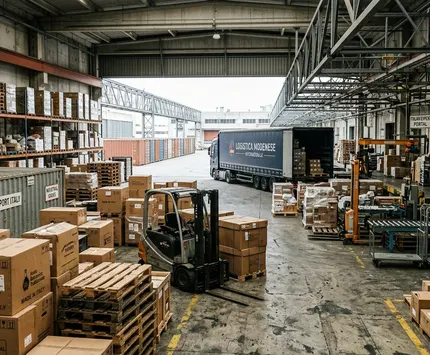
The Incoterms exercise should use the same hypothetical shipment under at least three delivery terms. Require participants to identify who arranges transport, who pays each cost item, when risk transfers, and where insurance responsibility sits.
6. Payment Terms and Contracts
Payment-term discussion should distinguish advance payment, letter of credit, documentary collection, and open account exposure without presenting any of them as universally safe. Contract and payment review should happen before the first pro forma invoice is treated as final commercial commitment. Quality management frameworks, such as ISO 9001 and ISO 9002, often mandate these structured contract reviews to ensure organizational alignment before accepting international liabilities.
7–9. Commercial Channels and Buyer Development
7. Distributor, Agent, Direct Sales, and Marketplace Models
Turn commercial ambition into route-to-market choices. Participants compare distributor, agent, direct sales, and marketplace models by asking what each model gives up in exchange for market access. Help participants decide when a distributor is useful, when it creates dependency, and when direct buyer development is more realistic.
8. Trade Fairs, B2B Missions, and Buyer Meetings
Trade fair or B2B mission preparation should begin 6 to 8 weeks before the meetings. Teams need a target buyer list, sample or demo plan, meeting script, and follow-up owner already assigned. Post-meeting follow-up should be logged within 48 to 72 hours, including buyer status, requested documents, quotation deadline, technical questions, and next contact date.
9. Digital Presence and Qualification
Export digital presence should include multilingual landing pages, product data sheets, export-ready contact workflows, LinkedIn credibility signals, technical documentation, and search behavior checks in the target market. Before discussing promotional materials, participants should draft three buyer qualification questions covering purchase role, current supplier arrangement, and service or documentation expectations.
Practice point: Draft qualification questions before designing promotional brochures to ensure sales conversations remain focused on buyer needs rather than supplier features.
10. Financing, Public Support, and the Follow-Up System
10. Export Finance, Incentives, and Post-Seminar Execution
Financing, incentives, and receivables matter because they determine whether a promising foreign order can be fulfilled. Working capital discussion should cover the gap between paying suppliers or production costs and receiving foreign-buyer payment, especially when longer delivery routes or post-shipment payment terms are involved.
Public incentives should be presented as eligibility paths to verify, not as guaranteed funding. Rules, windows, documentation, and eligible expenses can change between calls.
Final audit: Remove any agenda topic that does not help participants make a concrete export decision.
Draft your final action plan today by naming one target market, one buyer segment, one risk to clarify, one document to improve, and one follow-up date.